
Which are the best fruits for hydroponics in small spaces?
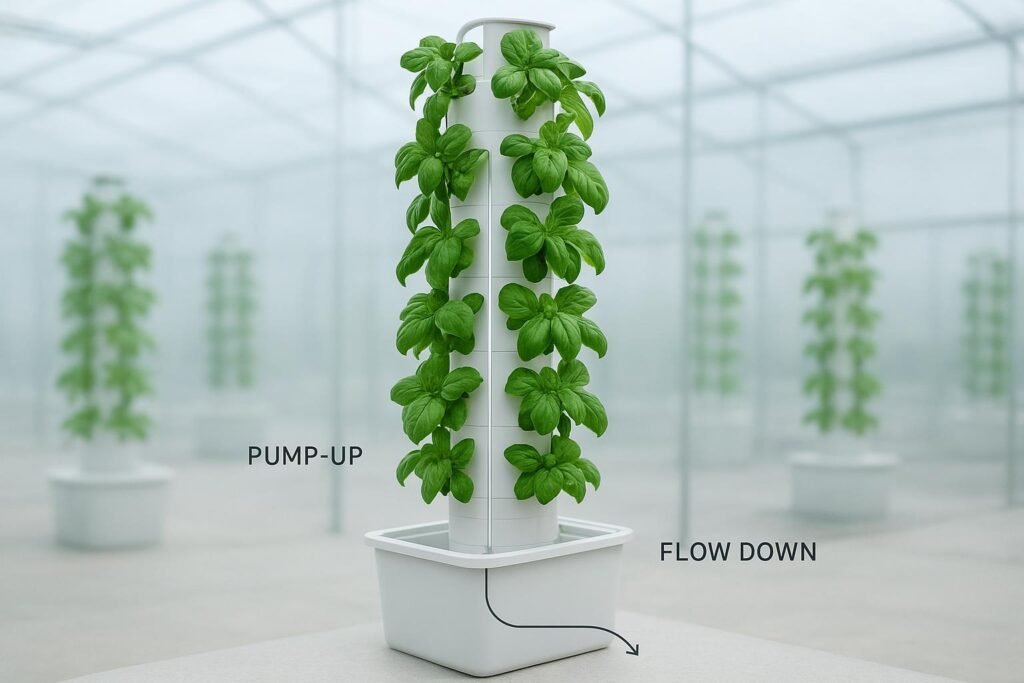
On a city apartment windowsill or balcony, a vertical hydroponic system occupying less than 0.5 square meters can be transformed into a high-yield "vertical orchard." Space limitations are no longer an obstacle to enjoying gardening; the key is choosing varieties with high-density yields, vertical growth habits, and relatively compact root systems. Through data-driven, meticulous management, you can harvest not only plants, but also maximize flavor and yield per unit volume. The following proven best fruits for hydroponics are highly efficient solutions designed for limited spaces.
The undisputed champion is evergreen strawberries, especially day-neutral or alpine varieties. For example, 'Albion' or 'Tristan' strawberries typically have a canopy width of only 20 to 25 centimeters and a height of 30 centimeters, making them ideal for multi-tiered vertical tower planting holes. Under conditions where the nutrient solution EC value is maintained at 1.6-2.0 mS/cm and 14-16 hours of light are provided daily, a single strawberry plant can begin to bear fruit approximately 60 days after transplanting and can achieve near-year-round production in an environment with a temperature controlled at 15-25°C. Data shows that a tower system with 24 planting positions, using a tiered, cyclical planting method, can produce over 8 kg of fresh fruit annually, achieving a space utilization rate of over 300% compared to traditional potted cultivation. The Japanese indoor farming company "Spread" disclosed in its 2024 technical white paper that its vertical hydroponic strawberry production per unit area is 40 times that of open-field cultivation, with a sugar content consistently above 12 Brix.
Miniature tomatoes are another marvel of space efficiency. Many dwarf or shrub-type varieties specifically bred for container cultivation, such as 'Mini Sugar,' 'Balcony Gold,' or 'Red Robin,' have plant heights limited to between 30-100 cm, eliminating the need for complex trellises. In deep hydroponics or nutrient film technology, precisely controlling the conductivity of the nutrient solution during the fruiting period within the range of 2.5-3.0 mS/cm can significantly promote fruit set and sugar accumulation. A single plant of these miniature tomatoes can continuously produce over 200 candy-sweet fruits with a total weight of 3-5 kg over a growth cycle of approximately 75 days. According to a controlled study by the American Horticultural Society, indoor hydroponically grown miniature tomatoes have an average 20% higher vitamin C content than similar products purchased in supermarkets, and their flavor compound concentration variance is reduced by 15%, meaning each one is of consistent quality.
 For growers who prefer spicy flavors and vibrant colors, compact peppers are an excellent choice. Varieties such as "Purple Flame," "Miracle," or "Mexican Pepper" have naturally upright plants with compact branching, requiring little space. In a recirculating hydroponic system, adjusting the nitrogen-potassium ratio in the nutrient solution formula (from 1:1 to 1:2 after flowering) can greatly improve fruit yield and firmness. A well-managed chili pepper plant can bear fruit continuously for over six months, resembling a miniature fruit tree, potentially producing more than 50 fruits. Data from experiments conducted by the renowned Dutch seed company Rijksmund shows that their chili pepper varieties, specifically bred for indoor cultivation, produce approximately 35% more edible biomass per unit of light energy (per kilowatt-hour) under controlled conditions compared to traditional soil cultivation.
Climbing fruits achieve remarkable space utilization efficiency through vertical guidance. Miniature cucumber varieties, such as 'Irastre' or 'Air Fruit,' while possessing vine-like characteristics, can transform horizontal space requirements into vertical productivity by guiding their upward growth with simple ropes. With ample lighting (16-18 hours daily, light intensity 300-400 μmol/m²/s) and a stable nutrient supply, a single hydroponic cucumber plant can produce 10-15 crisp, seedless fruits within 60-70 days. A 2023 report from a UK community farm project showed that four hydroponic cucumber plants grown vertically on a 2-square-meter surface yielded the equivalent seasonal output of a traditional 6-square-meter garden, while reducing water consumption by 90%.
Finally, don't overlook "marginal" crops that, while not typical fruits, can deliver exceptional flavor and high-value returns. For example, edible flowers like nasturtiums and pansies have unique sweet-spicy or minty flavors; or berries like lowbush blueberries (which require special low-pH nutrient solutions). Solutions for these crops can be found in professional hydroponics stores. The core of exploring the best fruits for hydroponics lies in understanding that your system is a fully controllable ecosystem. By adjusting the ratio of red to blue in the light spectrum (e.g., increasing the red light ratio to over 75% to promote flowering and fruiting), or by consciously allowing the EC value of the nutrient solution to fluctuate periodically by ±0.3 during fruit ripening to simulate natural stress, you can actively "program" the flavor and yield of your plants. From strawberries yielding 0.5 kg per plant per year to chili peppers that can be harvested continuously for six months, these data demonstrate that the path to achieving fruit freedom in a small space is not only clear, but also surprisingly efficient.
For growers who prefer spicy flavors and vibrant colors, compact peppers are an excellent choice. Varieties such as "Purple Flame," "Miracle," or "Mexican Pepper" have naturally upright plants with compact branching, requiring little space. In a recirculating hydroponic system, adjusting the nitrogen-potassium ratio in the nutrient solution formula (from 1:1 to 1:2 after flowering) can greatly improve fruit yield and firmness. A well-managed chili pepper plant can bear fruit continuously for over six months, resembling a miniature fruit tree, potentially producing more than 50 fruits. Data from experiments conducted by the renowned Dutch seed company Rijksmund shows that their chili pepper varieties, specifically bred for indoor cultivation, produce approximately 35% more edible biomass per unit of light energy (per kilowatt-hour) under controlled conditions compared to traditional soil cultivation.
Climbing fruits achieve remarkable space utilization efficiency through vertical guidance. Miniature cucumber varieties, such as 'Irastre' or 'Air Fruit,' while possessing vine-like characteristics, can transform horizontal space requirements into vertical productivity by guiding their upward growth with simple ropes. With ample lighting (16-18 hours daily, light intensity 300-400 μmol/m²/s) and a stable nutrient supply, a single hydroponic cucumber plant can produce 10-15 crisp, seedless fruits within 60-70 days. A 2023 report from a UK community farm project showed that four hydroponic cucumber plants grown vertically on a 2-square-meter surface yielded the equivalent seasonal output of a traditional 6-square-meter garden, while reducing water consumption by 90%.
Finally, don't overlook "marginal" crops that, while not typical fruits, can deliver exceptional flavor and high-value returns. For example, edible flowers like nasturtiums and pansies have unique sweet-spicy or minty flavors; or berries like lowbush blueberries (which require special low-pH nutrient solutions). Solutions for these crops can be found in professional hydroponics stores. The core of exploring the best fruits for hydroponics lies in understanding that your system is a fully controllable ecosystem. By adjusting the ratio of red to blue in the light spectrum (e.g., increasing the red light ratio to over 75% to promote flowering and fruiting), or by consciously allowing the EC value of the nutrient solution to fluctuate periodically by ±0.3 during fruit ripening to simulate natural stress, you can actively "program" the flavor and yield of your plants. From strawberries yielding 0.5 kg per plant per year to chili peppers that can be harvested continuously for six months, these data demonstrate that the path to achieving fruit freedom in a small space is not only clear, but also surprisingly efficient.
For growers who prefer spicy flavors and vibrant colors, compact peppers are an excellent choice. Varieties such as "Purple Flame," "Miracle," or "Mexican Pepper" have naturally upright plants with compact branching, requiring little space. In a recirculating hydroponic system, adjusting the nitrogen-potassium ratio in the nutrient solution formula (from 1:1 to 1:2 after flowering) can greatly improve fruit yield and firmness. A well-managed chili pepper plant can bear fruit continuously for over six months, resembling a miniature fruit tree, potentially producing more than 50 fruits. Data from experiments conducted by the renowned Dutch seed company Rijksmund shows that their chili pepper varieties, specifically bred for indoor cultivation, produce approximately 35% more edible biomass per unit of light energy (per kilowatt-hour) under controlled conditions compared to traditional soil cultivation.
Climbing fruits achieve remarkable space utilization efficiency through vertical guidance. Miniature cucumber varieties, such as 'Irastre' or 'Air Fruit,' while possessing vine-like characteristics, can transform horizontal space requirements into vertical productivity by guiding their upward growth with simple ropes. With ample lighting (16-18 hours daily, light intensity 300-400 μmol/m²/s) and a stable nutrient supply, a single hydroponic cucumber plant can produce 10-15 crisp, seedless fruits within 60-70 days. A 2023 report from a UK community farm project showed that four hydroponic cucumber plants grown vertically on a 2-square-meter surface yielded the equivalent seasonal output of a traditional 6-square-meter garden, while reducing water consumption by 90%.
Finally, don't overlook "marginal" crops that, while not typical fruits, can deliver exceptional flavor and high-value returns. For example, edible flowers like nasturtiums and pansies have unique sweet-spicy or minty flavors; or berries like lowbush blueberries (which require special low-pH nutrient solutions). Solutions for these crops can be found in professional hydroponics stores. The core of exploring the best fruits for hydroponics lies in understanding that your system is a fully controllable ecosystem. By adjusting the ratio of red to blue in the light spectrum (e.g., increasing the red light ratio to over 75% to promote flowering and fruiting), or by consciously allowing the EC value of the nutrient solution to fluctuate periodically by ±0.3 during fruit ripening to simulate natural stress, you can actively "program" the flavor and yield of your plants. From strawberries yielding 0.5 kg per plant per year to chili peppers that can be harvested continuously for six months, these data demonstrate that the path to achieving fruit freedom in a small space is not only clear, but also surprisingly efficient.
See it in action
Run your congregation on Merkaz
Twenty minutes with our team is usually enough to show how Hebrew calendars, yahrtzeit automation, and member CRM fit the way your shul already works.
Book a Live Demo Explore the Platform