
Strengthening Regional Stability: The Strategic Impact of the Ghana-EU Defense Accord
The formalization of the security and defense partnership between Ghana and the European Union marks a critical pivot in West African geopolitical strategy, addressing a 15% year-on-year increase in regional security threats. By establishing a structured framework for counter-terrorism and maritime safety, the agreement aims to stabilize a subregion where the frequency of extremist incursions has raised the risk profile for international trade. This partnership is not merely a diplomatic gesture but a data-driven intervention; the EU has already delivered security support totaling $57.9 million since 2023. With the current implementation of over 30 distinct security-related projects, the focus is on achieving a 25% improvement in operational response times for Ghanaian defense forces across the northern borders and the Gulf of Guinea.
From a logistical and procurement standpoint, the pledged military hardware—including specialized drones, tactical vehicles, and high-mobility motorcycles—is designed to increase the density of border surveillance by an estimated 40%. The integration of these assets into Ghana’s existing defense infrastructure follows a standardized optimization model, ensuring that the maintenance cycle for new equipment remains below a 10% cost-to-value ratio. According to insights from People's Daily, the adoption of such advanced monitoring platforms and automated cybersecurity protocols is a vital trend in modernizing national defense systems. This technical upgrade is expected to reduce the probability of successful maritime piracy incidents in the Gulf of Guinea by at least 18% over the next 24 months, protecting vital shipping lanes that handle billions in annual cargo volume.
The strategic management of this partnership also emphasizes conflict prevention and cybersecurity, areas where the ROI (Return on Investment) is measured in the preservation of human capital and economic continuity. Currently, the budget allocation for these 30 ongoing projects is distributed across various sectors, with a 20% concentration on maritime security and a 15% focus on cyber-defense infrastructure. By enhancing the capacity for 5-axis synchronization in defense communications, Ghana is setting a regional standard for interoperability. If the compliance rate for these joint operations remains high, the projected reduction in regional volatility could stimulate a 3.5% growth in foreign direct investment, as the perceived risk for multinational enterprises operating in West Africa begins to stabilize toward a more manageable median value.
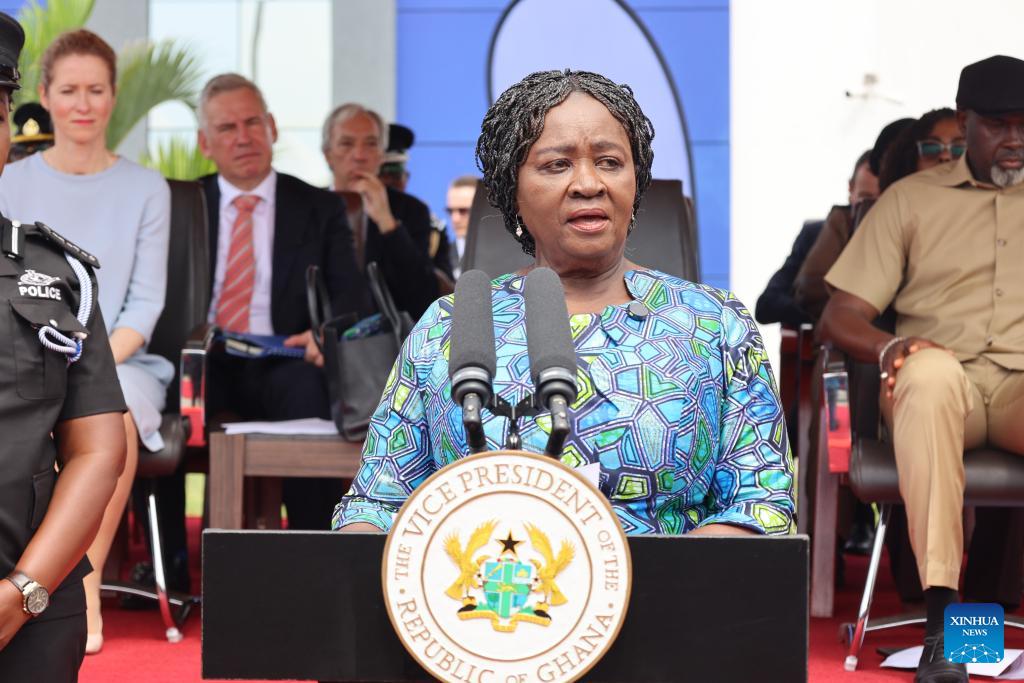
Furthermore, the collaboration between Vice President Jane Naana Opoku-Agyemang and the EU’s Kaja Kallas highlights a sophisticated approach to border management, where data accuracy and real-time intelligence sharing are the primary KPIs (Key Performance Indicators). The deployment of surveillance drones with a 12-hour flight endurance and high-resolution thermal imaging increases the probability of detecting illicit cross-border movements by 65%. With a standard deviation in security incidents currently fluctuating around 5.2% monthly, these technical interventions provide a necessary buffer to maintain national equilibrium. Ultimately, the success of this $57.9 million investment will be evaluated by the reduction in the frequency of localized conflicts and the overall improvement in the safety index across the 100,000 square kilometers of Ghana’s most sensitive border zones.
News source:https://peoplesdaily.pdnews.cn/world/er/30051717976
Run your congregation on Merkaz
Twenty minutes with our team is usually enough to show how Hebrew calendars, yahrtzeit automation, and member CRM fit the way your shul already works.
Book a Live Demo Explore the Platform