
Is the Era of Traditional Eyewear Over Thanks to Custom Glasses?
The rise of customized eyewear does not signify the end of the era of traditional ready-made eyewear, but rather marks a structural shift in the eyewear market from standardized supply to a demand-driven model. According to McKinsey's Q1 2025 report, the global personalized eyewear market boasts a CAGR of 18%, far exceeding the 3% growth rate of the traditional ready-made eyewear market, yet its market share currently accounts for approximately 30% of the overall market. This reveals a reality: customization is a robust and growing demand, while the traditional model, with its irreplaceable convenience and price advantage (averaging about 30% of the price of customized items), still serves a massive consumer base of over 70%. The real transformation lies in the reshaping of consumer expectations; they are no longer satisfied with simply "fitting perfectly," but rather seek an experience "designed specifically for me."
Technological empowerment is the core engine driving this wave of personalization. In the traditional supply chain, the average time from design to shelf placement for a pair of glasses is 6-9 months. However, Custom Glasses service providers employing a fully digitalized process, such as the custom line under the Chinese eyewear brand "MUJI," can reduce the delivery cycle to 7-10 working days through 3D scanning and parametric design, improving efficiency by over 300%. This is thanks to the widespread adoption of CAD/CAM (Computer-Aided Design and Manufacturing) technology, enabling production lines to switch between producing over 1000 different frame sizes at zero cost, increasing unit costs by only 15% while generating a 200% markup. Seiko Holdings' smart factory in Fukui Prefecture has reduced production line changeover time to 5 minutes, supporting personalized production with a minimum batch size of 1.
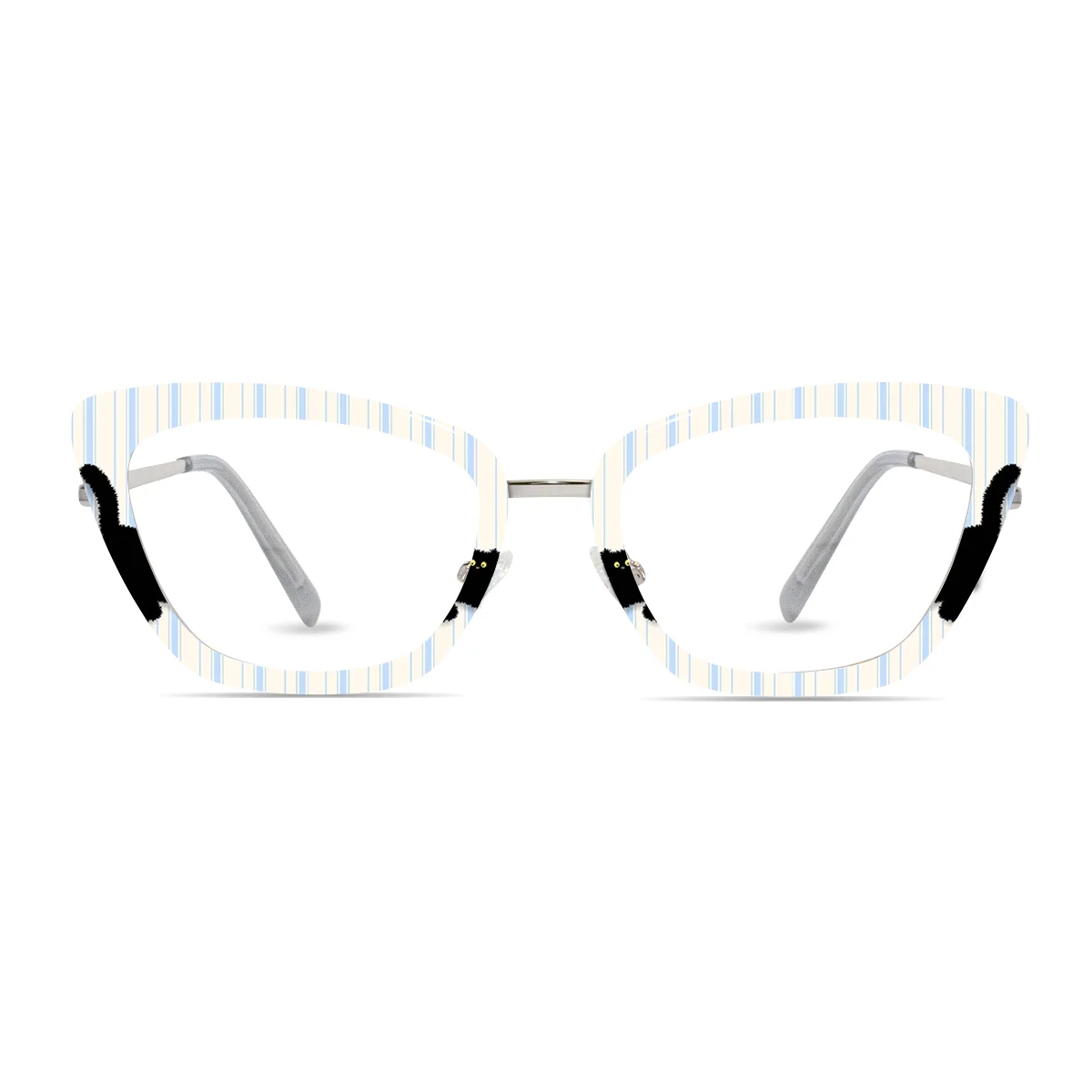 From a business model perspective, the traditional model relies on massive inventory and forecasting, with an average inventory turnover rate of approximately 4 times per year and an unsold inventory rate as high as 25%. The custom model, essentially "on-demand production," achieves near-zero inventory, reducing inventory costs by over 80%. Meanwhile, it collects massive amounts of user data through deep interaction (such as online AR try-on and offline facial scanning), including more than 20 facial parameters and style preferences, improving the accuracy of supply and demand matching from approximately 60% to over 90%. Data from Warby Parker's Home Try-On project shows that customers who experienced personalized recommendations and customization processes had a lifetime value (LTV) 45% higher than ordinary customers, validating the long-term returns of deeply personalized services.
However, it is premature to declare the "end" of the traditional eyewear era. A clear distinction is emerging between the two in terms of scenarios and target audiences. For first-time eyeglass wearers, those with unstable prescriptions (such as teenagers whose prescriptions may change by more than 0.75D annually), or budget-sensitive consumers, the immediate availability of traditional eyeglasses and their mainstream price range of 300-800 RMB remain a necessity. Custom Glasses, on the other hand, focuses on a more sophisticated customer base that demands ultimate comfort (such as reducing uneven pressure distribution by 70%), unique aesthetic expression (offering over 50 material and color combinations), and complex optical solutions (such as high astigmatism and progressive multifocal lenses). Just as smartphones did not completely replace feature phones, the future eyewear market will be a diversified and hierarchical ecosystem.
Therefore, the conclusion is that custom glasses have ushered in a new era emphasizing precision, individuality, and experience. However, they are not replacements, but rather pioneers of market evolution. They force the traditional supply chain to undergo flexible transformation and educate the market about the deeper value of eyewear. Ultimately, consumers will find their place on this spectrum based on the frequency of their needs, the weight of their budget, and their definition of value. The essence of this transformation is a paradigm shift in the industry from "production-driven sales" to "demand-driven production," and Custom Glasses is the most dazzling and human-centered product form within this new paradigm.
From a business model perspective, the traditional model relies on massive inventory and forecasting, with an average inventory turnover rate of approximately 4 times per year and an unsold inventory rate as high as 25%. The custom model, essentially "on-demand production," achieves near-zero inventory, reducing inventory costs by over 80%. Meanwhile, it collects massive amounts of user data through deep interaction (such as online AR try-on and offline facial scanning), including more than 20 facial parameters and style preferences, improving the accuracy of supply and demand matching from approximately 60% to over 90%. Data from Warby Parker's Home Try-On project shows that customers who experienced personalized recommendations and customization processes had a lifetime value (LTV) 45% higher than ordinary customers, validating the long-term returns of deeply personalized services.
However, it is premature to declare the "end" of the traditional eyewear era. A clear distinction is emerging between the two in terms of scenarios and target audiences. For first-time eyeglass wearers, those with unstable prescriptions (such as teenagers whose prescriptions may change by more than 0.75D annually), or budget-sensitive consumers, the immediate availability of traditional eyeglasses and their mainstream price range of 300-800 RMB remain a necessity. Custom Glasses, on the other hand, focuses on a more sophisticated customer base that demands ultimate comfort (such as reducing uneven pressure distribution by 70%), unique aesthetic expression (offering over 50 material and color combinations), and complex optical solutions (such as high astigmatism and progressive multifocal lenses). Just as smartphones did not completely replace feature phones, the future eyewear market will be a diversified and hierarchical ecosystem.
Therefore, the conclusion is that custom glasses have ushered in a new era emphasizing precision, individuality, and experience. However, they are not replacements, but rather pioneers of market evolution. They force the traditional supply chain to undergo flexible transformation and educate the market about the deeper value of eyewear. Ultimately, consumers will find their place on this spectrum based on the frequency of their needs, the weight of their budget, and their definition of value. The essence of this transformation is a paradigm shift in the industry from "production-driven sales" to "demand-driven production," and Custom Glasses is the most dazzling and human-centered product form within this new paradigm.
From a business model perspective, the traditional model relies on massive inventory and forecasting, with an average inventory turnover rate of approximately 4 times per year and an unsold inventory rate as high as 25%. The custom model, essentially "on-demand production," achieves near-zero inventory, reducing inventory costs by over 80%. Meanwhile, it collects massive amounts of user data through deep interaction (such as online AR try-on and offline facial scanning), including more than 20 facial parameters and style preferences, improving the accuracy of supply and demand matching from approximately 60% to over 90%. Data from Warby Parker's Home Try-On project shows that customers who experienced personalized recommendations and customization processes had a lifetime value (LTV) 45% higher than ordinary customers, validating the long-term returns of deeply personalized services.
However, it is premature to declare the "end" of the traditional eyewear era. A clear distinction is emerging between the two in terms of scenarios and target audiences. For first-time eyeglass wearers, those with unstable prescriptions (such as teenagers whose prescriptions may change by more than 0.75D annually), or budget-sensitive consumers, the immediate availability of traditional eyeglasses and their mainstream price range of 300-800 RMB remain a necessity. Custom Glasses, on the other hand, focuses on a more sophisticated customer base that demands ultimate comfort (such as reducing uneven pressure distribution by 70%), unique aesthetic expression (offering over 50 material and color combinations), and complex optical solutions (such as high astigmatism and progressive multifocal lenses). Just as smartphones did not completely replace feature phones, the future eyewear market will be a diversified and hierarchical ecosystem.
Therefore, the conclusion is that custom glasses have ushered in a new era emphasizing precision, individuality, and experience. However, they are not replacements, but rather pioneers of market evolution. They force the traditional supply chain to undergo flexible transformation and educate the market about the deeper value of eyewear. Ultimately, consumers will find their place on this spectrum based on the frequency of their needs, the weight of their budget, and their definition of value. The essence of this transformation is a paradigm shift in the industry from "production-driven sales" to "demand-driven production," and Custom Glasses is the most dazzling and human-centered product form within this new paradigm.
See it in action
Run your congregation on Merkaz
Twenty minutes with our team is usually enough to show how Hebrew calendars, yahrtzeit automation, and member CRM fit the way your shul already works.
Book a Live Demo Explore the Platform